|
In prep
Morrison, C. R., Smiley, J. T., MacNeill, F., Salazar, G., Sedio, B. A., and L. E. Gilbert. In prep. Secondary metabolites and ant attendance drive the diverse assemblage structure of a coevolved passion vine specialist insect community. Moskowitz, N. A., Alvarez-Buylla, A., Morrison, C. R., Chamba, A., Rentería, J., Tapia, E. A., Coloma, L. A., Donoso, D. A., and L. A. O’Connell. In prep. Poison frog diet and chemical defense are influenced by availability and selectivity for ants https://www.biorxiv.org/content/10.1101/2022.06.14.495949v1 In press Morrison, C. R., Armstrong, W.A., and L. E. Gilbert. In press. Egg cannibalism by passion vine specialist Disonycha Chevrolat flea beetles (Coleoptera: Chrysomelidae). https://www.biorxiv.org/content/10.1101/2020.04.15.005611v1 Published Morrison, C.R., Hart, L., Wolf, A., Sedio, B. E., Armstrong, W.A., and L. E. Gilbert. 2024. Higher soil nutrient availability provides plants with survival bonuses, not trade-offs: correlated growth traits, chemical defenses, and metabolomic expression of a tropical passion vine. Functional Ecology. https://doi.org/10.1111/1365-2435.14537 The Herbivory Variability Network, … C.R. Morrison, … and W.C. Wetzel. 2023. Plant size, latitude, and phylogeny explain within-population variability in herbivory. Science 382: 679–683. https://www.science.org/doi/10.1126/ science.adh8830 Morrison, C.R., Plowes, R. M., Ng'iru, I., Rhodes, A. C., Martins, D. J., & Gilbert, L. E. 2023. Arthropod associates of Kenyan buffelgrass (Cenchrus ciliaris): a field survey for biological control candidates of a globally important invasive grass. African Entomology 31. http://dx.doi.org/10.17159/2254-8854/2023/a16178 Morrison, C.R., Nguyen, C., and L. E. Gilbert. 2023. The role of host plant usage and the accumulation of toxic secondary chemical compounds across the life cycle of a passion vine specialist butterfly. Ecological Entomology. https://doi.org/10.1111/een.13229 Morrison C. R., Rhodes, A. R., Bowman, E. A., Sedio, B. E., Plowes, R. M., and L. E. Gilbert. 2023. Adding insult to injury: Light competition and novel weapons interact to facilitate Guinea grass invasion. Ecosphere 14:e4438. https://doi.org/10.1002/ecs2.4438
Morrison, C. R., Plowes, R. M., Jones, N. T., and L. E. Gilbert. 2020. Host quality does not matter to native or invasive cactus moth larvae: grave implications for North American prickly pears. Ecological Entomology 46:319–333. https://doi.org/10.1111/een.12964
Darragh, K., Montejo-Kovacevich, G., Kozak, K. M., Morrison, C. R., Figueiredo, C., Ready, J., Salazar, C., Linares, M., Byers, K. J. R., Merrill, R. M., McMillan, W. O., Schulz, S., and C. D. Jiggins. 2020. Species specificity and intraspecific variation in the chemical profiles of Heliconius butterflies across a large geographic range. Ecology and Evolution 10:3895–3918. https://doi.org/10.1101/573469. Smiley, J. and C. R. Morrison. 2020. Using a portable hydrogen cyanide gas meter to uncover a dynamic phytochemical landscape. Applications in Plant Sciences 8:e11336. https://doi.org/10.1002/aps3.11336. Concha, C., Wallbank, R. W. R., Hanly, J. J., Fenner, J., Livraghi, L., Rivera, E. S., Paulo, D. F., Arias, C., Vargas, M., Sanjeev, M., Morrison, C. R., Tian, D., Aguirre, P., Ferrara, S., Foley, J., Pardo-Diaz, C., Salazar, C., Linares, M., Massardo, D., Counterman, B. A., Scott, M. J., Jiggins, C. D., Papa, R., Martin, A., and W. O. McMillan. 2019. Interplay between developmental flexibility and determinism in the evolution of mimetic Heliconius wing patterns. Current Biology 29:3996–4009. https://doi.org/10.1016/j.cub.2019.10.010 Morrison, C. R., Aubert, C., and D. M. Windsor. 2019. Variation in Host Plant Usage and Diet Breadth Predict Sibling Preference and Performance in the Neotropical Tortoise Beetle Chelymorpha alternans (Coleoptera: Chrysomelidae: Cassidinae). Environmental Entomology 48:382–394. https://doi.org/10.1093/ee/nvy194. Morrison, C. R. 2018. Predation of top predators: cane toad consumption of bullet ants in a Panamanian lowland wet forest. The Journal of Tropical Ecology 0:1–5, https://doi.org/10.1017/S0266467418000342. Morrison, C. R., and D. M. Windsor. 2017. The life history of the neotropical Tortoise Beetles Chelymorpha alternans from the Republic of Panama. Annals of the Entomological Society of America 111:31–41. https://doi.org/10.1093/aesa/sax075. Darragh, K., Vanjari, S., Mann, F., Gonzalez, M. R., Morrison, C. R., Salazar, C., Pardo-Diaz. C., Merrill, R. M., McMillan, W. O, Schulz, S., and C. D. Jiggins. 2017. Male sex pheromone components in Heliconius butterflies released by the androconia affect female choice. PeerJ e3953. https://doi.org/10.7717/peerj.3953. Glassmire, A. E., Jeffrey, C. S., Forister, M. L., Parchman, T., Nice, C. C., Jahner, J. P., Wilson, J., Walla, T., Robinson, L., Smilanich, A. M., Morrison, C. R., Simbaña, W., Salgaje, L. A., Dodson, C., Miller, J., Leonard, M. D., and L. A. Dyer. 2016. Intraspecific phytochemical variation drives population and community structure for specialist caterpillar. New Phytologist 212:208–219. https://doi.org/10.1111/nph.14038.
Bernhard, J. M., Morrison, C. R., Pape, E., Beaudoin, D. J., Todaro, A., Pachiadaki, M. G., Kormas, K. A., and V. P. Edgcomb. 2015. Metazoans of redoxocline sediments in Mediterranean deep-sea hypersaline anoxic basins. BMC Biology 13. https://doi.org/10.1186/s12915-015-0213-6. Bernhard, J. M., Kormas K., Pachiadaki, M. G., Rocke, E., Beaudoin, D. J., Morrison, C. R., Visscher, P. T., Cobban, A.,Starczak, V. R., and V. P. Edgcomb. 2014. Benthic protists and fungi of Mediterranean deep hypersaline anoxic basin redoxcline sediments. Extreme Microbiology 5. https://doi.org/10.3389/fmicb.2014.00605. Baguley, J. G., Montagna, P. A., Cooksey, C., Hyland, J. L., Bang, H. W., Kamikawa, A., Bennetts, P., Morrison, C. R., Saiyo, G., Parsons, E., Herdener, M., and M. Ricci. 2014. Community response of deep-sea soft-sediment metazoan meiofauna to the Deepwater Horizon blow out and oil spill. Marine Ecological Progress Series 528:127–140. https://doi.org/10.3354/meps11290.
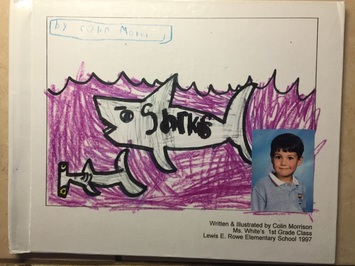
My first scientific publication! I forgot about this fine book until my mom recently found it. Clearly, I've always had the passion for nature. #Sharks4life |
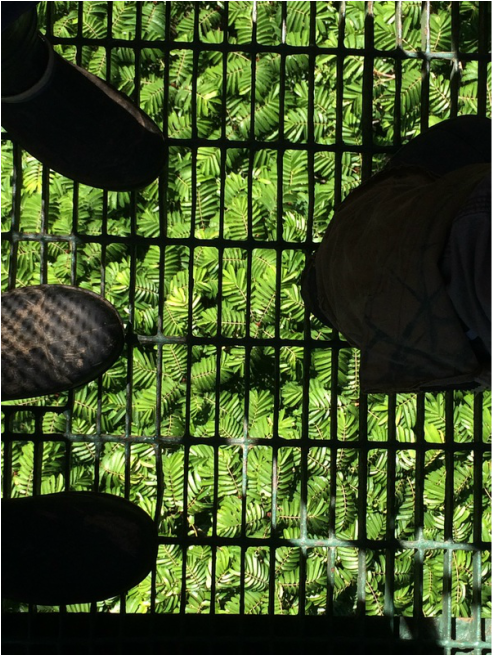
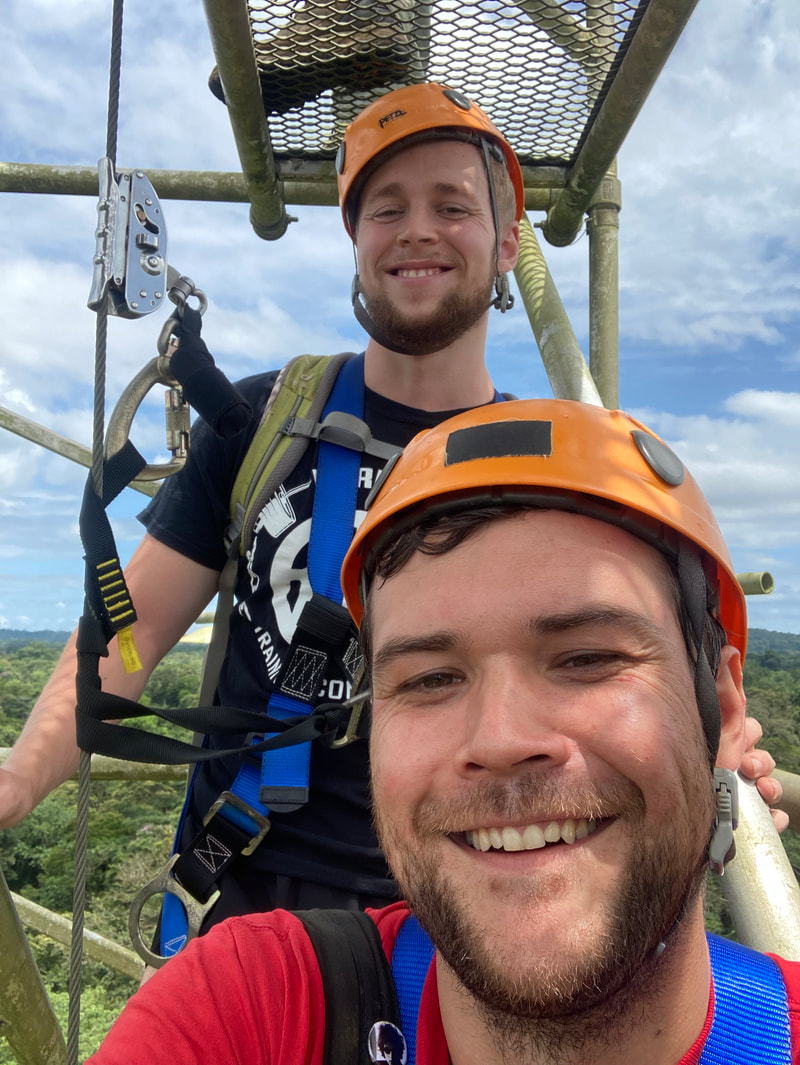
The view from 50m above the forest floor - STRI canopy crane,
Parque Nacional San Lorenzo, Panama. 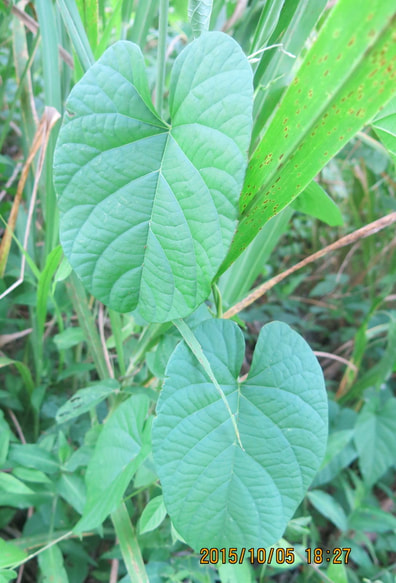
Merremia umbellata (Convolvulaceae). Gamboa, Panama.
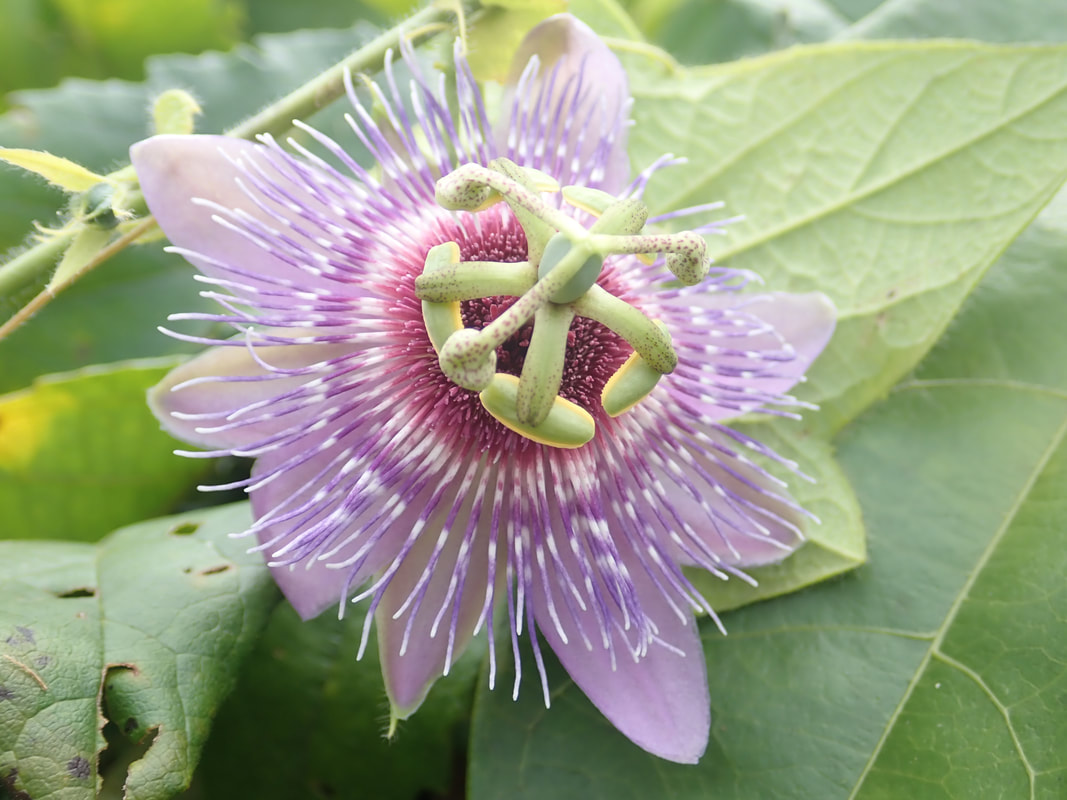
Passiflora menispermifolia (Passifloraceae). La Selva BS, Costa Rica.
|